NASA Depends on Freedom and Liberty

Nasa
When most people think of the ships in NASA's fleet, they think of the space shuttles that pierce the sky as they carry astronauts toward space. But NASA has two seagoing ships, Liberty Star and Freedom Star, which also stand ready on shuttle launch day. Their crews' mission is heading to sea to retrieve the two solid rocket boosters that power the shuttle's ascent.

"A typical crew that we carry is 24 people. We've got ten crew, ten diver specialists, and retrieval operations personnel," says Freedom Star Captain Mike Nicholas, a 24-year booster retrieval veteran who works for United Space Alliance. "We depart the port 24 hours in advance. It takes us roughly 12 to 15 hours to get offshore to our SRB impact area.

Then we'll stand by, and do surveillance work to keep other vessels out of the area so that when the launch goes, we have a window that the boosters can come in safely without any traffic being around."

The crews, divers and ships are prepared long before the solid boosters ignite at the launch pad.

Read More

What We Could Lose if the James Webb Telescope Is Killed

nasa
NASA's James Webb telescope, the successor to the Hubble, is on the chopping block. With the U.S. Congress arguing over fiscal matters, one of the things that may get cut is NASA's budget, with the expensive James Webb telescope potentially getting the ax. If that happens, a generation of scientific discoveries about the nature of the universe may need to be put on hold.

Right now the future of the Webb telescope, scheduled to launch in 2018, is uncertain. Congress is looking to cut costs, and NASA's budget could be cut by as much as $1.6 billion (or about nine percent of its overall budget). Such a big cut would certainly be the death knell for the Webb telescope, which has so far cost $3 billion but whose final price is expected to hit the $6.8-billion mark.

"The cost overruns are driven by a couple things," says Rick Howard, the program director of the James Webb Space Telescope at NASA. "We've had ten or so technologies that needed to work in order to have this kind of telescope—mirrors actuators, the sunshade. We've made great progress, but it's taken longer and it's been harder than we thought. We've hand to invent new adhesives for carbon fiber because what we thought was the right chemical equation didn't work at all. Another source was inadequate early funding of reserves."

Read More

NASA still hiring heroes for Astronaut Corps, just not as many as before

Astranaut
McNair Middle science teacher Guytri Still tells her students to aim high, study hard and one day they can be an astronaut like their school's namesake and the "heroes" they see rocket into space just miles from their Rockledge campus.

But after Atlantis' final launch scheduled for Friday, Still is afraid it will become much more complicated to follow in the footsteps of Challenger astronaut Ronald McNair since Americans will be relying, at least for the foreseeable future, on the Russian space program for trips to orbit.

"We tell kids, 'When you grow up you can be an astronaut,' " Still said. "What do we tell them now?"

The message from Peggy Whitson, head of the Astronaut Corps: Keep telling them that. There will still be a need for daring, smart space professionals.

"The biggest misconception with the shuttle program coming to an end: We're not going to be flying astronauts," Whitson said. "We are. I still want young people to dream to be astronauts. There will be jobs out there."

Read More

Technology from space shuttle program a big hit on Earth

Nasa
Many people mistakenly think they were born out of NASA’s space shuttle program. Truth is, none of them was invented for NASA shuttle missions, and all were commercially available products that were adapted for space travel use. Their use in orbit, however, probably contributed to their popularity.

So with the approach of the final shuttle launch, what types of technological advancements has NASA brought us?

Since 1976, more than 1,700 documented NASA technologies have benefited U.S. industry, improved our quality of life, and created jobs and industries. NASA says the space shuttle program alone has generated more than 100 technology spinoffs — commercially available systems, products or services that owe their existence to NASA-based technologies.

It’s almost impossible to find an area of everyday life that has not been improved by these spinoffs.

Think about it. Whether you drive a car, walk into your home, visit a hospital or just simply indulge in a recreational activity, chances are you’re coming into contact with a product that is the result of technology first developed by NASA.

For instance, homeowners are insulating their homes with the same lightweight, flexible material NASA uses to insulate low-temperature areas on space shuttles.

Goodyear Tire & Rubber Co. produced a radial tire with a tread life expected to be 10,000 miles greater than conventional radials by using a fibrous material it developed for NASA.

When law enforcement officials needed help improving grainy crime scene video, NASA assisted with high-tech image-processing technology it used to analyze space shuttle launch video.

Read more:

The excitement of 'new space'

Nasa
Like all would-be space entrepreneurs, David Thompson needed a big idea to get his business going.

Having worked on the development of the shuttle, he thought there might be something interesting one could usefully do with the vehicles' giant external fuel tanks.

These behemoths are dumped once the orbiters have made it into space and fall back into the atmosphere to be destroyed.

Thompson's brainwave was to push them into orbit, also.

His vision was for them to be filled with water. Over time, the tanks would then use electrolysis to split the liquid into hydrogen and oxygen - to produce yet more rocket fuel. A "gas station in the sky".

"There were a number of problems with this idea," Thompson recalls with a grin - "the number one being that there weren't that many rockets coming along this road where our gas station would be."

Undeterred, he simply moved on to his next concept.

Read More

After final shuttle, NASA must return to Earth

Nasa
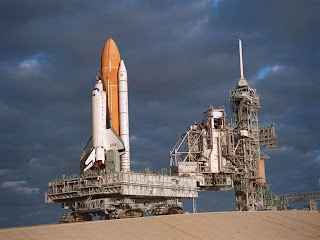
The last shuttle, Atlantis, sits on Pad 39A, ready for its valedictory flight.

It is the nature of a shuttle to look kind of lonely on the pad, a safe remove from the control room, the hangars, the observation platforms. The pad is not far from the beach, one of the last stretches of Florida coastline unblemished by hotels and condos.

Beach houses were torn down years ago when the federal government showed up with rockets. Old-timers talk of graveyards and an old schoolhouse lurking out there, the remnants of the era before the coming of the spaceport.

The U.S. space program is middle-aged, facing a painful transition. Atlantis will blast off, if all goes as planned, Friday morning for a 12-day mission to the international space station. And then ... what?

Then a lot of uncertainty. The only sure bet is that thousands of people here will be out of a job.

NASA's critics say the human spaceflight program is in a shambles. They see arm-waving and paperwork rather than a carefully defined mission going forward. NASA has lots of plans, but it has no new rocket ready to launch, no specific destination selected, and no means in the near term to get U.S. astronauts into space other than by buying a seat on one of Russia's aging Soyuz spacecraft.

Read More

NASA Research Plane to Make Low Passes Over Area

nasa
Pasadena residents will likely see—and hear—a large low-flying aircraft skimming just above the region in the coming weeks.

Don’t be alarmed; it will just be one of two NASA research planes making their scheduled flights through the region as part of an effort to study urban air quality.

The planes will be making passes at the relatively low altitude of 1,000 feet, according to a NASA release.

Officials said the test is also intended to help scientists improve their ability to measure ground-level air pollution from space.

According to a release, about 14 flights are planned. They are scheduled to take place between June 27 and July 31, depending on the weather.

Read More

NASA sues astronaut over Apollo 14 camera

Nasa

If you were the sixth man on the moon, you might think that, like Hollywood actors on a set, you deserved a souvenir or two.

It seems that, 40 years ago, after Edgar Mitchell performed his moonwalking duties, he took a lunar movie camera home with him, one that he tried to auction in May.

In Reuters' description, Mitchell's lawyer says that he received permission from NASA to take the camera.

The mention of the word "lawyer" might lead you to conclude that there might be a dispute. Indeed, the U.S. government, on behalf of NASA, has reportedly filed papers in court to prevent the auction from happening and to have the camera returned to NASA.

Donald Jacobson, Mitchell's lawyer, told Reuters: "Objects from the lunar trips to the moon were ultimately mounted and then presented to the astronauts as a gift after they had helped NASA on a mission."

However, NASA is saying that as it has no written record of the transfer of ownership, it should have it back.

Indeed, the Palm Beach Post says the government is being remarkably insistent in its filing. It quotes the papers as saying: "Defendant Edgar Mitchell is a former NASA employee who is exercising improper dominion and control over a NASA Data Acquisition Camera."

The camera was expected to fetch somewhere between $60,000 to $80,000, which doesn't seem a vast enough amount for NASA to toss a conniption.

Read more:


Space Junk Threatens Astronauts

space junk
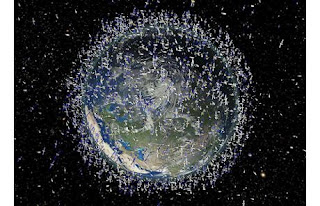
Space junk veered dangerously close to the International Space Station, forcing the six astronauts onboard to seek shelter in lifeboats Tuesday.

The unidentified object came within 1,100 feet of the space station--closer than any piece of space junk ever, NASA's space operations chief, Bill Gerstenmaier told the Associated Press.

NASA got only 14 hours' notice of the object's approach, not nearly enough time to maneuver the space station out of harm's way, so Mission Control ordered the astronauts into the two Russian Soyuz capsules parked at the station. After about a half an hour, Mission Control gave the all-clear and the two Americans, three Russians and one Japanese floated back and resumed their work.

The event was harrowing because even a small piece of debris can cause big damage, an event that would have forced the astronauts to undock their space capsules and return to Earth.


Read More

NASA Will Compete Space Launch System (SLS) Boosters

Nasa
It should come as no surprise that NASA has selected a "shuttle-derived" vehicle with two existing LOX/LH2 stages as its reference design for the new heavy-lift Space Launch System (SLS) ordered by Congress and to be used for exploration missions beyond low Earth orbit (LEO).

Over the past few years NASA had supported the use of solid rocket boosters (SRBs) as strap-on motors for both the now-cancelled Ares I and Ares V launch systems.

Many experts have opposed the use of SRBs for these applications, because of limited energy efficiency and expensive post-flight refurbishing. NASA has now decided to hold a competition between liquid-propellant and solid-propellant boosters for the SLS in order to satisfy a Congressional mandate.

The use of liquid-propellant boosters is not a new idea. The original proposed Space Shuttle design had included reusable fly-back liquid boosters as far back as the early 1970s.

Read More

NASA to fly low over Baltimore-Washington area

Nasa
A misguided photo shoot of Air Force One over New York City in 2009 terrified residents, infuriated the president, and cost the director of the White House Military Office his job. Now, NASA is working to prevent a similar panic in Washington D.C.

NASA officials this week announced plans for a new mission to monitor air pollution in the Baltimore-Washington traffic corridor that will include a series of low-altitude flights between the two cities. Trying to prevent a repeat of the chaos raised in New York, they are eager to get the word out to the public.

Read More

NASA to fly low over Baltimore-Washington area

Nasa

A misguided photo shoot of Air Force One over New York City in 2009 terrified residents, infuriated the president, and cost the director of the White House Military Office his job. Now, NASA is working to prevent a similar panic in Washington D.C.

NASA officials this week announced plans for a new mission to monitor air pollution in the Baltimore-Washington traffic corridor that will include a series of low-altitude flights between the two cities. Trying to prevent a repeat of the chaos raised in New York, they are eager to get the word out to the public.

Michael Finneran, spokesman for the DISCOVER-AQ project, says that NASA is publicizing the flights to generate awareness and to make sure people "won't be surprised." "Public safety is paramount," he said.

NASA plans to use a P-3B, a 117-foot, four-engine turboprop plane, for flights that will be as low as 1,000 feet. The lower of the two aircraft will fly in spirals over several ground measurement stations along the flight path, which includes Interstate 95 and crosses over the Chesapeake Bay Bridge.

Read More

Living on Martian Time

Living on mars
In 2008, NASA successfully landed a robotic machine called Phoenix in the northern polar region of Mars in an attempt to uncover water and organic material from the frozen environment atop the Red Planet. Overseeing the mission was space engineer Peter Smith, a man who disdains his unofficial title as "world's greatest Martian photographer" ("Don't call me that . . . It diminishes the science," Smith is fond of saying) despite his talent for preserving "little Mars vignettes" for all on Earth to see. Smith is also known for other accomplishments, including the device he spent five years building—an excavator that could scoop up Martian soil samples for analysis on command from its operators 200 million miles away, ultimately proving that there was water on Mars in some form. The other epic achievement was his decision to find a fresh voice to tell the story of searching for life forms on other planets. Smith chose Andrew Kessler, a 32-year-old creative director for Huge, a New York design and marketing firm, who holds a degree in mathematics. Kessler may not be a scientist but he was fascinated and understood outer space well enough to co-produce the documentary Mars: The Quest for Life for the Discovery Channel.

Read More

Astronaut Mark Kelly Announces Retirement from NASA

Mark Kelly
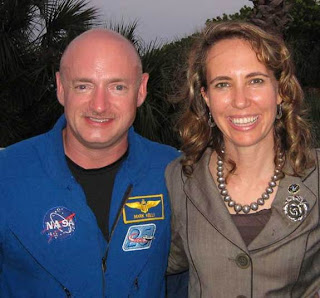
Astronaut Mark Kelly, the husband of wounded U.S. Congresswoman Gabrielle Giffords, on Tuesday announced that he will retire from the National Aeronautics and Space Administration (NASA) on October 1 in order to focus on his family.

“We salute Commander Mark Kelly and his contributions to NASA as an extremely accomplished member of the astronaut corps and the final commander of the space shuttle Endeavour,” said NASA Administrator Charles Bolden.

Kelly, also a U.S. Navy captain, is a veteran of four space shuttle missions. He announced his retirement in a post on his Facebook account and via his Twitter account as well.

“This was not an easy decision. Public service has been more than a job for me and for my family,” Kelly wrote. “There isn’t a group more dedicated to its mission or more capable than the outstanding men and women of NASA.”

Kelly commanded the STS-134 flight in May and STS-124 in 2008. He served as the pilot on STS-121 in 2006 and STS-108 in 2001. He first joined NASA as an astronaut candidate in 1996.

“We know that Mark will continue to do great things for his country no matter what he chooses to do next. He has helped us build a space program poised to take advantage of the many opportunities in our bright future,” added Bolden.

Read More

Crew arrives at shuttle pad to practice launch

Shuttle pad
The four astronauts who will fly on the last-ever space shuttle mission landed at NASA's Florida spaceport Monday evening to participate in a dress rehearsal for their July 8 launch.

Flying in a pair of NASA's T-38 supersonic jets, the crew touched down at 5:30 p.m. EDT here at NASA's Kennedy Space Center, landing on the same runway the astronauts plan to use when they return to Earth at the end of their upcoming mission.

NASA's final shuttle flight, called STS-135, is a 12-day mission on the shuttle Atlantis that will deliver vital supplies to the International Space Station.

The shuttle will be commanded by Chris Ferguson, who landed his T-38 jet today with crewmate Rex Walheim, an Atlantis mission specialist. Atlantis' pilot Doug Hurley rode in on the second T-38 jet with mission specialist Sandra Magnus.

Read More

NASA Issues Announcement For Solar Electric Propulsion Studies

Solar Electric Propulsion
NASA issued a Broad Agency Announcement (BAA) seeking proposals for mission concept studies of a solar electric propulsion system demonstration to test and validate key capabilities and technologies for future exploration missions.

Multiple studies have shown the advantages of using solar electric propulsion to efficiently transport heavy payloads from low Earth orbit to higher orbits. This concept enables the delivery of payloads to low Earth orbit via conventional chemical rockets. The use of solar electric propulsion could then spiral payloads out to higher energy orbits, including Lagrange point one, a potential assembly point in space between Earth and the moon. This approach could facilitate missions to near Earth asteroids and other destinations in deep space.

Science missions could use solar electric propulsion to reach distant regions of the solar system, and commercial missions could use solar electric propulsion tugs to place, service, resupply, reposition and salvage space assets. NASA's strategic roadmaps for exploration, science and advanced technology all consider solar electric propulsion a vital and necessary future capability.

NASA is examining potential mission concepts for a high-power solar electric propulsion system demonstration. Flying a demonstration mission on a representative trajectory through the Van Allen radiation belts and operating in actual space environments could reveal unknown systems-level and operational issues. Mission data will lower the technical and cost risk associated with future solar electric propulsion spacecraft. The flight demonstration mission would test and validate key capabilities and technologies required for future exploration elements such as a 300 kilowatt solar electric transfer vehicle.

Read More

Ice may cover parts of Mercury

Mercury
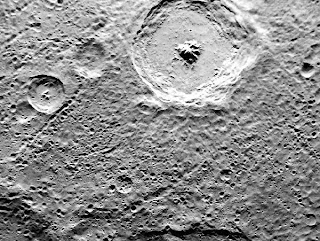
The planet closest to the sun appears to have more ice at its poles than does Earth's moon, say scientists analyzing data from the Messenger spacecraft.

Despite their proximity to the sun, portions of the surface of Mercury appear to be covered in ice, scientists said Thursday after analyzing about 20,000 new images of the solar system's smallest planet.

The pictures beamed to Earth by the Messenger spacecraft strongly suggest that frozen water — and perhaps other frozen substances — coat portions of impact craters near the planet's north and south poles. Permanently enshrouded in shadow, these surfaces are typically 300 degrees below zero Fahrenheit.

Read More

Giant black holes a window into origins of earliest galaxies

Black Hole
Astronomers have discerned evidence for supermassive black holes at the hearts of some of the earliest galaxies detected to date – budding when the universe was between 700 million and 950 million years old.

The detection, announced Wednesday and appearing in Thursday's issue of the journal Nature, already is hinting at answers to longstanding riddles surrounding the origin of supermassive black holes, which lurk in the cores of all galaxies.

The observations also are helping to tease out the role these black holes in galactic centers might have played in lighting up the universe following an early period known as the "dark ages."


The results mark "the first time we've caught black holes in the act of vigorously growing in the early universe," along with their host galaxies, says Mitchell Begelman, an astrophysicist at the University of Colorado at Boulder.

Read More

Shuttle’s End Leaves NASA a Pension Bill

Nasa
The nation’s space agency plans to spend about half a billion dollars next year to replenish the pension fund of the contractor that has supplied thousands of workers to the space shuttle program.

The shuttle program accounts for a vast majority of the business of United Space Alliance, originally a joint venture of Boeing and Lockheed Martin. With the demise of the shuttle program, United Space Alliance will be left without a source of revenue to keep its pension plan afloat. So the company wants to terminate its family of pension plans, covering 11,000 workers and retirees, and continue as a smaller, nimbler concern to compete for other contracts.

Normally, a company that lost a lifeblood contract would have little choice but to declare bankruptcy and ask the federal insurer, the Pension Benefit Guaranty Corporation, to take over its pensions. But that insurer limits benefits, meaning not everyone gets as much as they had been promised. United Space Alliance’s plan also allows participants to take their pensions as a single check and includes retiree health benefits, neither of which would be permitted by the pension insurer.

Read More

NASA's Curiosity Continues Mobility Checkouts

nasa
Spacecraft specialists at NASA's Jet Propulsion Laboratory, Pasadena, Calif., have been putting the Mars Science Laboratory rover, Curiosity, through various tests in preparation for shipment to NASA's Kennedy Space Center in Florida this month.

A new set of images online shows the rover maneuvering its robotic arm and driving in JPL's Spacecraft Assembly Facility, where it was built. The images are available at: http://www.nasa.gov/mission_pages/msl/multimedia/index.html .

Assembly and testing work is on track for launch of the Mars Science Laboratory from Cape Canaveral Air Force Station, Fla., during the period from Nov. 25 to Dec. 18, 2011.

JPL, a division of the California Institute of Technology in Pasadena, manages the mission for the NASA Science Mission Directorate, Washington. This mission will land Curiosity on Mars in August 2012.

Read More

Some NASA boosters question need for new rocket

Nasa Boosters
By month’s end, NASA plans to present Congress with a design for a new rocket that one day could take astronauts to the moon or beyond.

Several options are on the table, including one that recycles key parts of the space shuttle, set to retire in July. But as engineers ponder designs, even some NASA boosters are posing a deeper question:

Why even build it?

With Congress struggling to control spending, critics are wondering whether the country needs a new spaceship that lacks both a mission and destination except for occasional trips to the International Space Station.

"I don’t think we need it. I don’t think we can afford to operate it. I think it will be rarely used and expensive to maintain," said Alan Stern, a former NASA associate administrator. "The most likely possibility is that it (the rocket) is unfortunately going to collapse under its own weight in a couple years."

Read More

Centennial-based ULA gives a boost to NASA mission to study ocean salinity

nasa salt study
When NASA's Aquarius satellite lifted off Friday to study ocean salinity, it was aboard a Delta II rocket provided by United Launch Alliance.

The Centennial-based company has six launches planned this year, with four involving Colorado aerospace firms.

"We typically spend two to four years on a given mission, with a lot of the early work occurring at our facility," said Jim Sponnick, ULA's vice president of mission operations. "So it is beneficial they are immediate to the area."

The launch schedule calls for ULA to tap its range of rockets. Destinations and weight decide what rocket and configurations are used, Sponnick said.

On the large side is the Atlas V rocket that will launch the Juno mission on Aug. 5. The 8,000-pound spacecraft was designed and built by Lockheed Martin Space Systems Co. in south Jefferson County. The NASA mission aims to understand Jupiter's origin and evolution.

GRAIL's twin spacecraft, due for launch Sept. 8 on a Delta II, also were designed and built by Lockheed. Weighing 800 pounds together, the spacecraft will study the moon's gravitational field.

Read More

NASA Satellite Snaps 3 Billionth Photo of Earth

Nasa
A 5-year-old NASA satellite has hit a mindboggling milestone high above Earth: The spacecraft snapped its 3 billionth image of the planet … that's right, 3 billion.

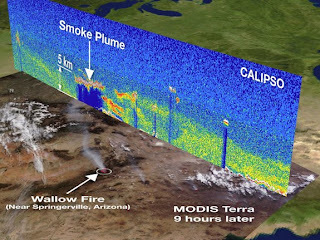
The prolific Earth-observation satellite, called CALIPSO, took the image on June 2 using laser and infrared ranging instruments and has since gone on to take more imagery. A June 3 image from the satellite shows a vertical look at the massive smoke plume from the wildfires in Arizona.

Since its 2006 launch, the CALIPSO satellite has traveled more than 750 million miles (1.2 million kilometers) as it orbits the Earth, NASA officials said in a statement. The amount of data and images it has recorded would fill 10,500 DVDs or 75,000 CDs, they added

Read More

NASA Selects Energid Technologies

Energid Technologies
The National Aeronautics and Space Administration (NASA) have funded Energid Technologies Corporation to develop a proxy digital simulation for lunar and planetary rovers.

To calculate contact among bodies and modeling interactions, the new proxy simulation uses a novel architecture. Algorithm being an especially important component, it allows each type of interaction to use a different algorithm. Two-year funding for this effort follows Energid's demonstration of the viability of simulating a rover and integrating with NASA's tools, during a six-month proof-of-concept effort. Using Energid's existing software, the approach relies on new modeling algorithms.

"There is no universal robotics simulation algorithm," said Chalongrath Pholsiri, principal engineer at Energid Technologies. "A wheel rotating against soft soil or regolith responds differently from a metal body striking a rock. We have many powerful technologies to apply to create the proxy simulation for NASA and we will discover more over the next two years."

Read More

NASA Releases First Pic of Shuttle Docked at Space Station

Shuttle
NASA on Tuesday released the first-ever image of a space shuttle docked at the International Space Station.

The image, which shows the space shuttle Endeavour docked at the ISS, was taken from the Soyuz TMA-20 after it left the station on May 23. Expedition 27 crew member Paolo Nespoli snapped the shot from an altitude of approximately 200 miles as he and Russian cosmonaut Dmitry Kondratyev and NASA astronaut Cady Coleman headed back to Earth.

They trio landed in Kazakhstan later that day after spending 159 days in space, and their spacecraft was taken to Moscow for routine post-landing analysis. NASA and the Russian space agency, Roscosmos, then processed the imagery, which will be posted on NASA's Web site as it becomes available. For more, see the slideshow below.

Read More

Edge of Solar System Filled with Bubbles, NASA Says

Nasa
The edge of our solar system is filled with a turbulent sea of magnetic bubbles, according to new NASA research.

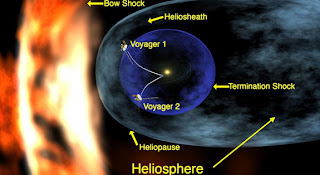
Scientists made the discovery by using a new computer model, which is based on data from NASA's twin Voyager probes. The unmanned Voyager 1 and Voyager 2, which launched in 1977, are plying the outer reaches of our solar system, a region known as the heliosheath.

The new discovery suggests that researchers will need to revise their views about the solar system's edge, NASA officials said. A more detailed picture of this region is key to our understanding of how fast-moving particles known as cosmic rays are spawned, and how they reach near-Earth space.

Read More
Ga. Tech to host NASA symposium on shuttle program

Nasa
Georgia Tech is hosting a symposium this week to explore the agency's space shuttle program, which ends soon.

The event is Monday through Wednesday at the university's Global Learning Center. It will bring together international scientists, engineers, mission designers, policymakers and others to talk about shuttle missions and the future of space exploration.

NASA Administrator Charles Bolden will open the symposium on Tuesday. Other speakers include astronauts Steve Hawley and Shannon Lucid and NASA deputy chief technologist Michael Gazarik.

Just one flight remains in the U.S. shuttle program with a targeted launch of July 8.

The five shuttles - Columbia, Challenger, Discovery, Atlantis and Endeavour - have flown more than 130 times and carried more than 360 people into space.

Read more:

The sky’s the limit for NASA research

Nasa Research
Business story “Go big, or go to war with the weapons you have” revealed the stunning fact “that between 1995 and 2009, the Pentagon spent more than $32 billion on weapons programs that were eventually canceled.” The programs were all for the Army.

In the same period, NASA was forced to cancel development efforts that had been underway for years to build space telescopes that could detect and study Earth-like planets around the stars closest to the sun. The problem was that these telescopes would cost a few billion dollars apiece, and NASA could not afford them.

Astronomers now know that Earth-like planets are commonplace — alien life is likely to exist in our neighborhood of the galaxy. Perhaps the Pentagon should start protecting us from a possible alien threat by surveillance of nearby habitable planets. If so, NASA (for whom I chair an advisory astrophysics subcommittee) has a few ideas on how to proceed.

Read More
Space shuttle Endeavour not expected to arrive in L.A. until late 2012

endeavour
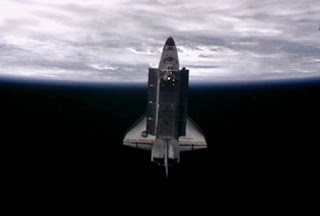
The space shuttle Endeavour is expected to arrive at its permanent retirement home in Los Angeles in the latter half of 2012, the president of the California Science Center said Wednesday.

Initially, museum officials had said the shuttle could arrive by the end of this year. But NASA officials said it would take longer to detoxify the space shuttle and prepare it for retirement. Complicating the timeline was the delay in Endeavour's final mission and preparation for the upcoming mission of the shuttle Atlantis in July, which will mark the last voyage of the space shuttle program.

In the meantime, Jeffrey Rudolph, the California Science Center's president, said the museum, in Exposition Park, is making progress raising $28.8 million to pay for Endeavour's cleanup at the Kennedy Space Center in Florida and to bring it to Los Angeles.

"We're not there yet. But we're feeling good about it," Rudolph said of the fundraising effort.

Parsons, a global engineering firm based in Pasadena, is donating its services to cover the logistics of transporting the orbiter from LAX to the museum grounds. The orbiter will have to be routed on streets that are not obstructed by freeway overpasses, Rudolph said.

Rudolph said it would have been impractical for NASA to have Endeavour land at Edwards Air Force Base in California, because much of the equipment to detoxify the shuttle is in Florida.

Read More

NASA's Super Cooling Technology

Nasa's cooling Technology
NASA recently formed technical partnerships with the U.S. Air Force and National Renewable Energy Laboratory to address thermal-control concerns in microprocessors. The problem is as old as the days of the integrated circuit which appeared in the 1960's and is the basis for the modern computer age. The more advanced the electronics, the more power it use and the hotter it gets. This can easily lead to overheating which can cause malfunction.


The new EHD thermal control will be demonstrated in June on NASA's Terrier-Improved Orion rocket mission, which is flying the Small Rocket/Spacecraft Technology (SMART) platform. This new microsatellite measures about 16 inches in diameter and was specifically designed to give scientific users less expensive access to space.

According to NASA, the main objective of the EHD demonstration is showing that a prototype pump can withstand the extreme launch loads as the rocket lifts off and hurtles toward space. Should it survive the vibration, the technology will have achieved a major milestone in its development. Another test is set to 2013 when the EHD will be taken into the International Space Station and tested as part of a long-term operation.

Read More
Shuttle Astronauts Serenaded by Song Contest Winners

Nasa
The astronauts on the space shuttle Endeavour woke up this evening to a song that was written specially for the crew who are flying the orbiter on its final mission.

A NASA contest sought original song entries to awaken the astronauts during Endeavour's STS-134 flight. The competition received 1,350 submissions, and NASA selected 10 songs as finalists before opening it up to six weeks of public voting. [The Astronaut's Playlist: Groovy Songs for Space Travelers]

"More than 1.5 million votes were cast to determine the first and second place songs," NASA officials said.

The second place winner, "Dreams You Give" by Brian Plunkett from Halfway, Mo., earned 612,959 votes, or 38.8 percent. Plunkett's song was played at 6:57 p.m. EDT (2257 GMT) tonight (May 30) to wake up Endeavour's six-astronaut crew.

"We're looking forward to another busy day and hopefully getting home tomorrow," Endeavour's commander Mark Kelly said after being woken with the tune. "That song was the second place winner in the wakeup music contest. Congratulations to Brian Plunkett from Halfway, Mo."

Read More

How NASA's OSIRIS-REx probe got its name

OSIRIS-REx
If Osiris, ancient Egyptian god of the underworld, and Tyrannosaurus rex, king of the dinosaurs, somehow had a baby, and that baby was an asteroid-bound spacecraft, it would be named OSIRIS-REx.

Yes, OSIRIS-REx is the acronym for the vessel that, NASA just announced, will launch in 2016, travel four years to an asteroid, chip off some rock samples and bring them back to Earth. The combination robot-spacecraft is the brainchild of researchers at the University of Arizona Lunar and Planetary Lab. And so is its funky name.

The deputy principal investigator of the OSIRIS-REx team, Dante Lauretta, is a mythology buff. "Why he has this interest I have no idea," principal investigator Michael Drake told Life's Little Mysteries, "but he was doodling on a pad and trying to capture the principal themes of what we are trying to do with this mission — study life origins, identify resources, planetary security in the form of asteroid deflection — and he realized he got the name of Osiris out of that, an ancient god of Egypt who may have been one of the first pharaohs."

Read More

U of A and NASA looking at asteroid headed for Earth

Nasa
The University of Arizona won an $800 million contract from NASA to go to an asteroid.

The OSIRIS-REx project will take a sample from Asteroid 1999RQ36 which scientists hope unlocks the origins of life on Earth, but that's not all.

"It actually has the highest probability of any object to hit the Earth in the year 2182," OSIRIS-REx Principal Investigator Michael Drake explained.

It's clearly not an eminent threat and not the main focus of the mission, but it's something NASA and U of A scientists are looking for from OSIRIS-REx.

Drake told KOLD News 13, "To understand how we'd actually mitigate against a dinosaur type ending impact. We don't want to go the way of the dinosaurs."

So to avoid that scenario, NASA and the U of A will send OSIRIS-REx to the asteroid and collect samples to get us some much needed asteroid answers.

"In spite of Bruce Willis, we do not know how to deflect these things. We will learn scientifically the properties we need to decide how to deflect them," Drake said.

While they try to figure out how to send the asteroid in another direction, scientists believe this mission is just the beginning.

Peter Smith, a scientist on the mission said, "It's the precursor to human missions to an asteroid and how exciting would that be. Can you imagine being tethered to your spacecraft and floating over to the asteroid and picking up samples."

Read More
NASA to launch asteroid mission in 2016

asteroid mission
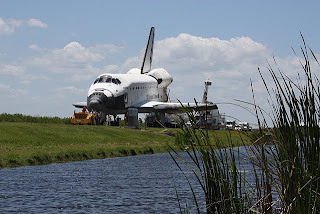
Earlier this week, NASA announced plans to use the Orion Crew Exploration Vehicle as the basis for a new spacecraft designed for deep space travel called the Multi-Purpose Crew Vehicle (MPCV). The MPCV is expected to be the primary spacecraft for NASA’s manned mission to a nearby asteroid in 2020, as set forth by President Obama last year. To prepare for that mission, NASA plans to launch a new science mission to an asteroid in 2016. The mission will be called Origins-Spectral Interpretation-Resource Identification-Security-Regolith Explorer, or OSIRIS-REx.

It will take OSIRIS-REx four years to travel to 1999 RQ36, a near-Earth asteroid. Once within three miles of the asteroid, the spacecraft will perform a comprehensive surface mapping over a period of six months. That mapping will allow for a location to be selected which OSIRIS-REx will approach to put the site within range of the spacecraft’s robotic arm which will be extended to collect two ounces of material. That material will be stored in a capsule, similar to the one used by the Stardust spacecraft to collect comet particles. The asteroid material will be returned to Earth and is expected to arrive in 2023 at which time it will be analyzed for the presence of organic molecules, key ingredients in creating life, which have been found in previous meteorite and comet samples.

Read More

Kepler's Insight to Physical Nature of Planetary Systems
nasa kepler
It’s been 808 days since the launch of one of NASA’s most prolific space observatories: the Kepler exoplanet-hunting space telescope. Kepler team members met in Boston this week at the meeting of the American Astronomical Society (AAS) to give a status report on their progress toward answering one of the most timeless questions in astronomy: how abundant are Earth-sized planets in the Galaxy?
They are methodically closing in on the answer, but certainly not there yet.

For the past two years, the spacecraft has kept a steady gaze on 165,000 stars in the summer constellation Cygnus. To date, Kepler has tallied 1235 candidate exoplanets with orbits inclined such that they can be seen passing in front of their stars. This trawl has required a staggering 5.5 billion separate brightness measurements.

Read More

Space Station Returns 3 Crew Members to Earth

Nasa
The International Space Station will release two astronauts and a Russian cosmonaut, returning them to earth tonight after more than five months living and working in orbit.

Russian cosmonaut Dmitry Kondratyev, Expedition 27 commander, and astronauts Catherine (Cady) Coleman of NASA and Paolo Nespoli of Italy will be landing their Russian-built Soyuz space capsule somewhere in Central Asia, probably on the steppes of Kazakhstan.

Kondratyev, Coleman and Nespoli will depart from the space station while the space shuttle Endeavour and its six-astronaut crew are docked at the orbiting laboratory. Endeavour is being retired following this, its last mission. The shuttle's team is half way through a 16-day mission to aid in the space station's day-to-day following the end of NASA's space shuttle program.

"I think we've done a lot of great science, and certainly I think the space station is in a really good state for the future," Coleman said, according to Space.com.

Read More

Longtime NASA tradition tied to North Texas

nasa
Few men order more flowers than Mark Shelton.

"I need to send some roses to Mission Control, please," he told a florist over the phone.

At 54, Shelton has never worked for NASA, but he is responsible for one of its longest traditions. Every time NASA launches a shuttle, Shelton sends roses to Mission Control at the Johnson Space Center in Houston.

Each rose represents every astronaut in space at the time. Shelton said he orders an extra white flower to represent the astronauts who have perished over the years.

He has sent a bouquet for every mission since 1987, the one following Challenger. It makes a total of 108 flower shipments in all.

"They don't get much attention in the media when things are going well," Shelton said of NASA. "But it's every bit as dangerous... every single [flight]. We wanted a way to give them a low-key reminder that the public cares."

NASA cares, too.

The space agency has invited Shelton to launches over the years, sent autographs from astronauts, Christmas cards from flight directors, and even a get well card when he had a heart attack.

"I don't know how they knew I was in the hospital then," he said.

Read More

NASA to Train Future Spacewalkers in Asteroid Landscape on Ocean Floor

NASA to Train Future Spacewalkers
Before humans explore an asteroid in space, a group of NASA astronauts and scientists will test concepts and techniques for the future expeditions on a mock space rock on the ocean floor.

This week, engineers are laying the foundations for the 15th expedition of NASA's Extreme Environment Mission Operations, or NEEMO 15 for short, which is scheduled to begin on Oct. 17. To prepare for that fall undersea mission, diving crews are setting up the tools and rocky environment needed to simulate an asteroid landscape. [Photos: Asteroids in Deep Space]

NEEMO expeditions take place at the National Oceanic and Atmospheric Administration's Aquarius Underwater Laboratory, which rests more than 62 feet (19 meters) below the ocean's surface, off the coast of Key Largo in the Florida Keys.

This year's NEEMO 15 expedition will simulate a trip to an asteroid, and the so-called "aquanauts" will investigate how best to anchor to the surface of a space rock and how to move around, said NASA spokesperson Brandi Dean.

To prepare for the 10-day October mission, various engineering tests will be conducted from May 9 to May 13 at the Aquarius laboratory. The NEEMO support team will perform surface dives to lay out the test site, including configuring a rock wall, NASA officials said.

Read more:

NASA to test untethered lander

Test Lander
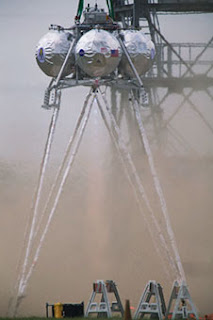
A squat, insectlike contraption is set to fly untethered for the first time soon in a NASA test of technologies designed to take humans to the moon, Mars or beyond.

The unmanned Morpheus lander, named after the Greek god of dreams, was built at NASA's Johnson Space Center in Houston using cutting-edge technologies that the agency hopes will one day enable manned missions to another planet or even an asteroid. The vehicle, about the size of an SUV, could carry about 1,100 pounds of cargo to the moon.

Not only are the technologies onboard innovative, but NASA's process of building the lander is, too.

"Part of what this project set out to do was to question the way we've done things," Project Morpheus manager Matt Ondler told Space.com. "We purposefully set out to see if we could do things faster and cheaper, leveraging off the work that was already done."

Read More

Nasa postpones Endeavour launch until 16 May

Endeavour launch
This is the latest in a series of delays since the shuttle's launch on 29 April was scrapped due to problems with its hydraulic systems. After the initial postponement, the agency targeted May 2, then May 8, and now mid-May at the earliest. Nasa managers have got to be worried that each subsequent delay is threatening the space shuttle programme's last ever launch, that of Atlantis, which is currently slated for 28 June.

"Kennedy [Space Center] technicians are continuing work to resolve an issue in a heater circuit associated with Endeavour's hydraulic system that resulted in the [April 29] launch postponement," Nasa said in a release on Friday. "Technicians determined the failure was inside an aft load control assembly, which is a switchbox in the shuttle's aft compartment, and possibly its associated electrical wiring."

Read More

NASA Selects Summer of Innovation Projects

Nasa Summer Project
NASA announced partnerships with nine organizations that will help the agency implement its 2011 Summer of Innovation (SoI) education program.

SoI uses NASA's out-of-this-world missions and technology programs to boost summer learning in science, technology, engineering and mathematics, or STEM, particularly for underrepresented and underperforming students.

The SoI 2011 partners are:

Chester County Intermediate School District-Unit 24, Downingtown, Pa.
Albany State University, Albany, Ga.
Nebraska Department of Education, Lincoln
Dorothy Jemison Foundation for Excellence, Houston
University of Idaho, Moscow, Idaho
Puerto Rico Institute of Robotics, Inc., San Juan, Puerto Rico
Rio Grande Valley Science Association, Edinburgh, Texas
Indiana Association of United Ways, Inc., Indianapolis
South Dakota Discovery Center and Aquarium, Pierre


"I am delighted that we have such a broad and diverse group of partner organizations ready to implement this year's Summer of Innovation program," said Leland Melvin, NASA associate administrator for education. "We look forward to building on the momentum that began last year, so we can engage and inspire even more middle school students to reach higher and pursue STEM career opportunities."

Read More

NASA Spacecraft Closing in On Huge Asteroid Vesta

Nasa Space Craft
A NASA spacecraft has reached a new phase of its mission to Vesta, the second-largest asteroid in the solar system, and is on track to arrive at the huge space rock in July.

The probe, NASA's Dawn spacecraft, is now using cameras for the first time to aid its approach to Vesta, a massive asteroid that many astronomers classify as a protoplanet. If all goes well, the ion-propelled probe should enter orbit around Vesta on July 16 to begin a year-long study of the mysterious space rock.

"We feel a little like Columbus approaching the shores of the New World," said Christopher Russell, Dawn principal investigator at UCLA, in a statement. "The Dawn team can't wait to start mapping this terra incognita."

Read More

Shuttle will launch no earlier than May 10

Space Shuttle Endeavour
Shuttle Endeavour won't set sail on its final flight before next Tuesday, May 10, at the earliest as Kennedy Space Center teams work to repair an electrical problem that scrubbed last Friday's launch attempt.

NASA had hoped a second attempt might be possible as soon as Sunday, but determined it would take about two more days than originally thought to ready the shuttle for another countdown.

"It became apparent Monday that more time was required," said Allard Beutel, a KSC spokesman.

Friday's launch scrubbed when heaters on a fuel line feeding part of the shuttle's hydraulic power system failed to turn on, a problem that could have led to a fire during flight.

Watch this week: We’ll see meteors from Halley’s Comet

Halley Comet
There’s a show happening later this week you won’t want to miss.

NASA recently reminded us that the Earth will pass through a stream of debris from Halley’s comet on May 6th. The result? A “mild but beautiful meteor shower” called the eta Aquarids.

If you want to witness the show, NASA’s advice is to be awake in the early morning hours this Friday. You’ll also want to get as far away from city lights as you can.

“Each eta Aquarid meteoroid is a piece of Halley’s Comet doing a kamikaze death dive into the atmosphere,” said NASA astronomer Bill Cooke. “Many people have never seen this famous comet, but on the morning of May 6th they can watch bits of it leave fiery trails across the sky.”

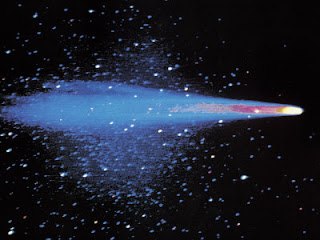
Halley’s Comet,which orbits the sun every 76 years, leaves behind a trail of vaporized debris when it swings by the sun. That means twice a year, the Earth gets a meteor shower. (In May, that’s the eta Aquarids. In October, it’s the Orionids.)

Read More

NASA's Voyager Probes to Leave Solar System by 2016

Nasa's Voyager
It may be decades before humanity sets foot on Mars, but we're only five years away from sampling the vast stretches of interstellar space beyond our solar system for the first time, researchers say.

NASA's twin unmanned Voyager spacecraft, which were launched in 1977, are streaking toward the edge of the solar system at around 37,000 mph (60,000 kph). At that rate, they'll probably pop out of our sun's sphere of influence and into interstellar space by 2016 or so, according to mission scientists.

"They are about to break free of the solar system," Ed Stone, Voyager project scientist at Caltech in Pasadena, Calif., said during a media teleconference yesterday (April 28). "We are trying to get outside of our bubble, into interstellar space, to directly measure what is there."

Read More

Lightning Strikes Behind Shuttle Endeavour in Spectacular Photos

Nasa endeavour Lighting
A barrage of thunderstorms and lightning in Florida created a spectacular backdrop for the space shuttle Endeavour late Thursday in striking photos taken on the eve of the spacecraft's final launch.

The stunning snapshots show Endeavour atop the seaside Launch Pad 39A at NASA's Kennedy Space Center in Cape Canaveral, Fla., as bolts of lightning light up the cloud-filled sky above. For those brief instants, the lightning cast an eerie purple glow over the shuttle and launch pad. [Photo of Endeavour and lightning]

NASA photographer Bill Ingalls snapped the photos, which the space agency posted online, during a series of storms that temporarily stalled efforts by shuttle technicians to prepare Endeavour for its planned launch on Friday, April 29, at 3:47 p.m. EDT (1947 GMT).

Read More

NASA Awards Knowledge Sharing and Curriculum Contract

NASA Awards
NASA selected InuTeq, LLC in Greenbelt, Md., for a follow-on contract award for support services for the agency's Office of the Chief Engineer's Academy of Program/Project and Engineering Leadership (APPEL).

InuTeq, LLC is a Small Business Administration 8(a)-certified small disadvantaged business. The company will provide services for developing NASA's technical workforce in systems engineering, engineering, and program and project management.

InuTeq also will provide curriculum development and knowledge sharing services; support for international collaboration; implementation of e-Learning into the APPEL program; and publish the Academy Sharing Knowledge Magazine.

The contract period of performance is five years, including options, with a maximum total value of $35,884,987.

Read More

Did investment in the shuttle program pay off?

Nasa
After 133 missions, 14 astronauts lost in two tragic accidents and almost four decades of work, NASA's space shuttles will head to museums once this year's final two missions are done.

So what did we get for the $113.7 billion that NASA says was spent on the shuttle?

A century-long dream, the reusable, winged space plane was sold by the space agency as the logical successor to the Apollo missions of the moon-race era in the early 1970s. Budget cuts and compromises such as enlarging the shuttle payload to hold military satellites limited the promise of making space travel cheap, frequent and easy, says historian Roger Launius of the Smithsonian's National Air and Space Museum in Washington.

"The history of the space shuttle is one of biting off more than we can chew," says policy analyst Roger Pielke Jr. of the University of Colorado. In a recent Nature journal estimate, Pielke put the true cost of the program at $192 billion from 1971 to 2010 (more than the space agency estimate partly because of adjustments for inflation), or about $1.5 billion per launch. In 1972, NASA estimated each launch could be done for $10.4million.

Read More

Dry ice lake suggests Mars once had a ‘Dust Bowl’

Dry Ice Mars
Mars today has a brutal environment — frigid, arid and, because of its very thin atmosphere, constantly bombarded by lethal radiation. But it was worse 600,000 years ago, according to new research that suggests the planet had a far dustier, stormier atmosphere.

“It was an unpleasant place to hang out,” said lead researcher Roger Phillips of the Southwest Research Institute in Boulder, Colo.
The evidence comes from the discovery of a huge underground reservoir of dry ice, or frozen carbon dioxide, at its south pole — much more than scientists realized. They suspect some of that store of carbon dioxide was once in Mars’ atmosphere, making it denser.

In the recent geologic past, when Mars’ axis tilted, sunlight reached the southern polar cap, melting some of the frozen carbon dioxide. This release would have made the atmosphere thicker and caused more dust to loft into the air, creating severe storms. Other times, carbon dioxide cycled back into the ground as part of a seasonal cycle.

Read More