Showing posts with label nasa events. Show all posts

Kepler's Insight to Physical Nature of Planetary Systems

nasa kepler
It’s been 808 days since the launch of one of NASA’s most prolific space observatories: the Kepler exoplanet-hunting space telescope. Kepler team members met in Boston this week at the meeting of the American Astronomical Society (AAS) to give a status report on their progress toward answering one of the most timeless questions in astronomy: how abundant are Earth-sized planets in the Galaxy?

They are methodically closing in on the answer, but certainly not there yet.

For the past two years, the spacecraft has kept a steady gaze on 165,000 stars in the summer constellation Cygnus. To date, Kepler has tallied 1235 candidate exoplanets with orbits inclined such that they can be seen passing in front of their stars. This trawl has required a staggering 5.5 billion separate brightness measurements.

Read More

Longtime NASA tradition tied to North Texas

nasa
Few men order more flowers than Mark Shelton.

"I need to send some roses to Mission Control, please," he told a florist over the phone.

At 54, Shelton has never worked for NASA, but he is responsible for one of its longest traditions. Every time NASA launches a shuttle, Shelton sends roses to Mission Control at the Johnson Space Center in Houston.

Each rose represents every astronaut in space at the time. Shelton said he orders an extra white flower to represent the astronauts who have perished over the years.

He has sent a bouquet for every mission since 1987, the one following Challenger. It makes a total of 108 flower shipments in all.

"They don't get much attention in the media when things are going well," Shelton said of NASA. "But it's every bit as dangerous... every single [flight]. We wanted a way to give them a low-key reminder that the public cares."

NASA cares, too.

The space agency has invited Shelton to launches over the years, sent autographs from astronauts, Christmas cards from flight directors, and even a get well card when he had a heart attack.

"I don't know how they knew I was in the hospital then," he said.

Read More

NASA to Train Future Spacewalkers in Asteroid Landscape on Ocean Floor

NASA to Train Future Spacewalkers
Before humans explore an asteroid in space, a group of NASA astronauts and scientists will test concepts and techniques for the future expeditions on a mock space rock on the ocean floor.

This week, engineers are laying the foundations for the 15th expedition of NASA's Extreme Environment Mission Operations, or NEEMO 15 for short, which is scheduled to begin on Oct. 17. To prepare for that fall undersea mission, diving crews are setting up the tools and rocky environment needed to simulate an asteroid landscape. [Photos: Asteroids in Deep Space]

NEEMO expeditions take place at the National Oceanic and Atmospheric Administration's Aquarius Underwater Laboratory, which rests more than 62 feet (19 meters) below the ocean's surface, off the coast of Key Largo in the Florida Keys.

This year's NEEMO 15 expedition will simulate a trip to an asteroid, and the so-called "aquanauts" will investigate how best to anchor to the surface of a space rock and how to move around, said NASA spokesperson Brandi Dean.

To prepare for the 10-day October mission, various engineering tests will be conducted from May 9 to May 13 at the Aquarius laboratory. The NEEMO support team will perform surface dives to lay out the test site, including configuring a rock wall, NASA officials said.

Read more:

NASA Selects Summer of Innovation Projects

Nasa Summer Project
NASA announced partnerships with nine organizations that will help the agency implement its 2011 Summer of Innovation (SoI) education program.

SoI uses NASA's out-of-this-world missions and technology programs to boost summer learning in science, technology, engineering and mathematics, or STEM, particularly for underrepresented and underperforming students.

The SoI 2011 partners are:

Chester County Intermediate School District-Unit 24, Downingtown, Pa.
Albany State University, Albany, Ga.
Nebraska Department of Education, Lincoln
Dorothy Jemison Foundation for Excellence, Houston
University of Idaho, Moscow, Idaho
Puerto Rico Institute of Robotics, Inc., San Juan, Puerto Rico
Rio Grande Valley Science Association, Edinburgh, Texas
Indiana Association of United Ways, Inc., Indianapolis
South Dakota Discovery Center and Aquarium, Pierre


"I am delighted that we have such a broad and diverse group of partner organizations ready to implement this year's Summer of Innovation program," said Leland Melvin, NASA associate administrator for education. "We look forward to building on the momentum that began last year, so we can engage and inspire even more middle school students to reach higher and pursue STEM career opportunities."

Read More

Watch this week: We’ll see meteors from Halley’s Comet

Halley Comet
There’s a show happening later this week you won’t want to miss.

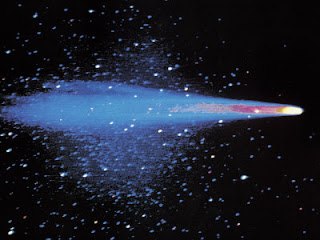
NASA recently reminded us that the Earth will pass through a stream of debris from Halley’s comet on May 6th. The result? A “mild but beautiful meteor shower” called the eta Aquarids.

If you want to witness the show, NASA’s advice is to be awake in the early morning hours this Friday. You’ll also want to get as far away from city lights as you can.

“Each eta Aquarid meteoroid is a piece of Halley’s Comet doing a kamikaze death dive into the atmosphere,” said NASA astronomer Bill Cooke. “Many people have never seen this famous comet, but on the morning of May 6th they can watch bits of it leave fiery trails across the sky.”

Halley’s Comet,which orbits the sun every 76 years, leaves behind a trail of vaporized debris when it swings by the sun. That means twice a year, the Earth gets a meteor shower. (In May, that’s the eta Aquarids. In October, it’s the Orionids.)

Read More

NASA's Voyager Probes to Leave Solar System by 2016

Nasa's Voyager
It may be decades before humanity sets foot on Mars, but we're only five years away from sampling the vast stretches of interstellar space beyond our solar system for the first time, researchers say.

NASA's twin unmanned Voyager spacecraft, which were launched in 1977, are streaking toward the edge of the solar system at around 37,000 mph (60,000 kph). At that rate, they'll probably pop out of our sun's sphere of influence and into interstellar space by 2016 or so, according to mission scientists.

"They are about to break free of the solar system," Ed Stone, Voyager project scientist at Caltech in Pasadena, Calif., said during a media teleconference yesterday (April 28). "We are trying to get outside of our bubble, into interstellar space, to directly measure what is there."

Read More

Dry ice lake suggests Mars once had a ‘Dust Bowl’

Dry Ice Mars
Mars today has a brutal environment — frigid, arid and, because of its very thin atmosphere, constantly bombarded by lethal radiation. But it was worse 600,000 years ago, according to new research that suggests the planet had a far dustier, stormier atmosphere.

“It was an unpleasant place to hang out,” said lead researcher Roger Phillips of the Southwest Research Institute in Boulder, Colo.
The evidence comes from the discovery of a huge underground reservoir of dry ice, or frozen carbon dioxide, at its south pole — much more than scientists realized. They suspect some of that store of carbon dioxide was once in Mars’ atmosphere, making it denser.

In the recent geologic past, when Mars’ axis tilted, sunlight reached the southern polar cap, melting some of the frozen carbon dioxide. This release would have made the atmosphere thicker and caused more dust to loft into the air, creating severe storms. Other times, carbon dioxide cycled back into the ground as part of a seasonal cycle.

Read More

Transcendence Splashes Down

Nasa
It is objectively no small feat, slipping the surly bonds of Earth. But somehow, over its 30 years of existence, NASA’s Space Shuttle program has become roughly as thrilling as the Delta Shuttle. Still, there’s something sad about the end of the program, which will officially shut down after Endeavour’s 25th and final mission, on April 29, and one last there-and-back by Space Shuttle Atlantis in June. It’s not so much that the program’s increasingly prosaic missions—they have amounted, in recent years, to something like space carpooling—will be missed. The sadness instead comes from the petering out of space travel’s promised transcendence.

The commonplace marvels of modern technology probably have something to do with this awe deficit—a 400-mile vertical round-trip in a less-than-sleek 1992-model vehicle may not seem as miraculous as it did in a time before one could, if booked on the right airline, stream Parks and Recreation onto an iPad mid-flight. The Shuttle program’s geopolitical moment has passed, too. We’re no longer going to space to prove that our way of life is superior to an evil empire’s; instead, we’re going up there to do some repairs, drop off a magnetic spectrometer, and see the sights. And with deficits suddenly the Greatest Threat Our Nation Has Ever Faced, such errands now stand out as a sore thumb of a line item. The Space Shuttle program has cost nearly $200 billion over its lifetime; at a moment when we’re cutting holes in the social safety net to try to balance the books, Friday’s Shuttle launch will cost what NASA says is nearly half a billion dollars and another estimate puts at $1.2 billion. That the “economic, scientific and technological returns of space exploration have far exceeded the investment,” as former NASA life-sciences director Joan Vernikos has written, makes the accounting look a little more favorable, of course. But simply talking about it that way suggests just how un-wonderful space has become.

Read More