NASA Gives Private Space Industry a $10 Million Boost

Nasa
NASA has given seven different private space firms contracts worth a combined $10 million, signaling the growing importance of private firms capable of supporting NASA's efforts in the post-shuttle era

Each of the seven companies will receive two-year contracts to transport unspecified payloads into sub-orbit, saying only that the materials aboard the reusable capsules would address "the agency [NASA]'s research and technology needs." The move is the latest instance of NASA nurturing the burgeoning private space industry, recognizing that the government may increasingly rely upon private contractors.

"Through this catalog approach, NASA is moving toward the goal of making frequent, low-cost access to near-space available to a wide range of engineers, scientists and technologists," NASA Chief Technologist Bobby Braun said in a statement. "The government's ability to open the suborbital research frontier to a broad community of innovators will enable maturation of the new technologies and capabilities needed for NASA's future missions in space."

Read More

Visionary Ideas Could Transform Future NASA Missions

Nasa mission
NASA, the U.S. space agency, has awarded $3 million in grants for 30 proposals which explore new ideas for America’s next generation space program.

The proposals reflect wide-ranging visions of new spacecraft designs, new propulsion systems and an expanded human presence in space. They each receive a first-year development grant of $100,000 to prove their worth.

NASA’s Innovative Advanced Concepts program (NIAC) received hundreds of proposals representing almost every aspect of the agency's mission.

“Just looking down the list, there are some that are related to humans trying to operate in space, some that are related to spacecraft trying to operate safely or protecting people from radiation," program executive Jay Falker says, "some that are improved propulsion concepts, some that are improved structures and some that would maybe enable us to do the kinds of missions we’ve done before, a space station or a space telescope, but much, much more efficiently.”

Read More

NASA astronaut in the pipeline for Prince Harry?

Nasa
Why shouldn’t princes be thrown off to space? Why shouldn’t they be in the majestic vanguard of information wellness and science, just as they are in the center of attention of OK magazine and Us Weekly?

You’ll forward to attention and salute when we tell you that a report has emerged that Prince Harry, he of the red hair and one of the well known British Royal Family, would like to be a NASA astronaut.

Indeed, it is been reported that Prince Harry’s brother, the recently married with Kate Middleton, actually confronted News International about its alleged hacking of his aides’ cell phones.

So please pay more attention when I tell you that Prince Harry is been said to be a big Trekkie and is “obsessed with space.”

He is currently on duty with the British Army Air Corps in Afghanistan.

The Sun, though, quotes a royal source as whispering through still lips: “Harry has already completed his studies of Land and Sea Surveillance and Oceanology–part of Astro training–and can’t wait to get into one of NASA’s T38 training jets.”

Read More

Endeavour Crew Talks With Hopkins Crowd

Endeavour Crew
The crew of the space shuttle Endeavour gathered at Johns Hopkins University on Thursday to talk about their experiences on one of NASA's final missions.

Endeavour lifted off for the International Space Station in May for the last time. It was the second to last flight for the space shuttle program.

Commander Mark Kelly, the husband of injured Arizona Rep. Gabrielle Giffords, led the talk with the panel of astronauts in front of a packed house.

"It's dark. It gets dark every 45 minutes," Kelly told the crowd. "We're really hopeful that we're going deliver some incredible discoveries to the American public and the people of the world, and it's going to prove to be a very valuable thing that we did in space."


"I think it's important, especially for my youngest son to understand that we really did go to space, and it was an important program," said mother Jennifer Leonard.

Read more:

NASA Kennedy Space Center is a toxic hell

Nasa
The Nitrogen Tetroxide Scrubber (above) at the Oxidizer Farm for Launch Pad 39A. Image courtesy Kennedy Space Center.

If you think about it, it makes sense. Rockets use all sorts of chemicals to fuel their flight. NASA has been using Cape Kennedy since the sixties to loft these wonders, and — at least back then — ecology and pollution weren’t top-of-mind considerations.

That’s too bad, because now that the Shuttle program has come to an end, we’re discovering that there’s more to the NASA legacy than national pride.

There’s toxic waste. Enough that it’ll take about a billion dollars to clean up.

Rosaly Santos-Ebaugh has a messy job on her hands. She’s KSC’s Remediation Program Manager, the person who heads up all cleanup efforts on the Cape. She describes the problem: “In the past, back in Apollo, the normal disposal of the solvent cleaning was down the drain … out the back door.”

Unfortunately, an awful lot went down the drain and has found its way as far as 90 feet deep into the soil under the various launch pads and production facilities at both Kennedy Space Center and the lesser-known Cape Canaveral Air Force Station.

Read More

NASA Closes Historic Antenna Station That Tracked Every Space Shuttle Launch

nasa
With no more radio signals to relay from space shuttles in flight, NASA parked a radio dish used to track launching and landing orbiters for the last time.

The antenna is one of two steerable 30-foot dish antennas at NASA's Merritt Island Launch Annex, or MILA, tracking and data station at the Kennedy Space Center in Florida. Its final reorientation from the horizontal to the vertical on Thursday (July 28) came as part of a ceremony to close the station after 45 years of service.

With that final move, the MILA station — which was first established for the Apollo program and was responsible for tracking radio transmissions from every shuttle launch for 30 year

Read More

NASA Study: Global Warming Alarmists Wrong

Nasa Global Warming
NASA has released a new study that may prove global-warming alarmists have been wrong all along.

Data from NASA's Terra satellite covering the period 2000 through 2011 shows that when the earth's climate heats up, the atmosphere appears to be better able to channel the heat to outer space.

The satellite data call into question the computer models favored by global warming believers and may put to rest controversy over the discrepancy between the computer models and actual meteorological readings.

Co-author of the study, Dr. Roy Spencer of the University of Alabama's Earth System Science Center, said in a press release, "The satellite observations suggest there is much more energy lost to space during and after warming than the climate models show. There is a huge discrepancy between the data and the forecasts that is especially big over the oceans."

In an Op-Ed in Forbes, senior fellow for environment policy at The Heartland Institute James M. Taylor, said, "In short, the central premise of alarmist global warming theory is that carbon dioxide emissions should be directly and indirectly trapping a certain amount of heat in the earth's atmosphere and preventing it from escaping into space.

Read more :

Juno's Jupiter mission may yield clues to Earth's origins

Jupiter Mission
Even for scientists versed in the grand scale of astronomy, it's never been easy to grasp the scope of Jupiter.

After all, you could fit every piece of the solar system other than the sun inside Jupiter — all the other planets, moons and asteroids — with plenty of room to spare. Jupiter has cannibalized 20 moons over the years and still has at least 63, one bigger than Mercury. Jupiter's "spot" is actually a hurricane, which has lasted for hundreds of years and is more than twice the diameter of Earth.

But Jupiter isn't just a forbidding ball of gas. Somewhere in there are the clues, scientists believe, to the origin of the solar system — and Earth. Starting the morning of Aug. 5, NASA will enter the launch period for the spacecraft Juno, which will begin an unprecedented exploration of Jupiter's profound secrets.

"We are after the recipe for planet-making. To get the list of ingredients — this is the place," said Scott Bolton, the mission's principal investigator and the director of space science at San Antonio's Southwest Research Institute.

Read More

NASA Sets Launch Coverage Events for Mission to Jupiter

Jupiter
NASA's Juno spacecraft is set to launch toward Jupiter aboard a United Launch Alliance Atlas V rocket on Aug. 5. The launch window extends from 11:34 a.m. to 12:33 p.m. EDT (8:34 to 9:33 a.m. PDT), and the launch period extends through Aug. 26.

The spacecraft is expected to arrive at Jupiter in 2016, on a mission to investigate the gas giant's origins, structure, atmosphere and magnetosphere. Juno's color camera will provide close-up images of Jupiter, including the first detailed views of the planets' poles.

NASA will host a prelaunch news conference in the News Center at the agency's Kennedy Space Center in Florida on Wednesday, Aug. 3, at 1 p.m. EDT (10 a.m. PDT). Conference participants are:

- Colleen Hartman, assistant associate administrator, Science Mission Directorate NASA Headquarters, Washington

- Omar Baez, NASA launch director at Kennedy Space Center

- Vernon Thorp, program manager, NASA Missions United Launch Alliance, Denver

- Jan Chodas, Juno project manager Jet Propulsion Laboratory, Pasadena, Calif.

- Tim Gasparini, Juno program manager Lockheed Martin Space Systems, Denver

Read More

NASA's New Mission: Boost the Muslim World's Self-Esteem

Nasa Mission
Now that the space shuttle program has been retired, NASA can start focusing on its primary mission: reaching out to the Muslim world.

In 1961, John F. Kennedy promised that America would be the first country to land a man on the moon. It was an exciting time for the space program and many amazing accomplishments were achieved, including the fulfillment of Kennedy’s promise, the moon landing of 1969.

It is quite sad to see how NASA has suffered in the last four decades. Instead of excitement about the space program, there is a sense that it is coming to an end with the retirement of the space shuttle.

Who could have predicted that NASA would no longer explore space, the final frontier? Despite all of the technology breakthroughs in the last four decades, our country is currently incapable of replicating what was done in 1969, sending an astronaut to the Moon.

NASA is a perfect example of a government bureaucracy that became inefficient and top-heavy with management, and lost sight of its most important objectives. Back in the 1960s, with the advent of the Apollo program, NASA was an adept and nimble agency, able to meet Kennedy’s ambitious challenge.

Today, we have a President who is not asking the agency to shoot for the stars. Instead, Barack Obama has other goals for NASA, such as studying the so-called problem of manmade global warming.

Read More

Biggest Ever Water Reservoir in History Found in Space

nasa
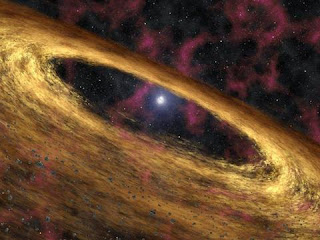
Astronomers have reported the discovery of a huge water vapor cloud floating around a black hole in space. The cloud is so big that scientists estimate it holds 140 trillion times the mass of water in the Earth's oceans, and is approximately 10 billion light years away.

The find is the largest discovery of water anywhere in history, and has been found in a distant “quasar.”

The Carnegie Institution, one of the groups behind the findings, has said, “Since astronomers expected water vapor to be present even in the early universe, the discovery of water is not itself a surprise.”

The statement added: “Quasars contain massive black holes that steadily consuming a surrounding disk of gas and dust; as it eats, the quasar spews out amounts of energy.”

Read More

NASA vs. China

Nasa vs china
If it’s Friday, that means it’s time to vote for the week’s greatest innovator. We narrow the week’s news down to two contenders as part of what we hope will be a long-running series. So take a moment to vote in our entirely nonscientific poll, or weigh in with your thoughts in the comments.

Last week’s match-up was between movie delivery and streaming service Netflix and music streaming service Spotify. According to our 100 percent nonscientific user poll, Spotify is the clear winner. But the polls stay open, so feel free to keep voting.

This week, it’s NASA vs. China. If you need a refresher as to why these two should be in contention, we have some background for you on how they moved the needle this week:

China: If you haven’t heard, fake Apple stores are popping up around China. The stores look almost identical to the certified Apple stores in the United States — stores that attract long lines of customers waiting for the latest Apple hardware or, as was the case this week, software.

The stores, however, have a few flaws. As a blogger who lives in China and goes by the name “BirdAbroad” wrote on Wednesday:

Read More

Pluto moon discovery hints at future surprises for NASA probe

PLUTO MOON
The discovery of a new moon around Pluto hints that a NASA spacecraft streaking toward the dwarf planet could uncover more surprises when it finally gets there.

The tiny new moon — announced July 20 and called P4 for now — brings the number of known Pluto satellites to four. And the find, made with the Hubble Space Telescope, suggests that NASA's New Horizons probe could make some big discoveries, too, when it makes a close flyby of Pluto in 2015, researchers said.

"The discovery of P4 just reinforces what we knew before: This is going to be completely new territory," said Hal Weaver, New Horizons project scientist at the Johns Hopkins University Applied Physics Laboratory in Laurel, Md. "We can't wait."

Read More

NASA Atlantis Shuttles Receives Red, White And Blue Homecoming

NASA
To celebrate the end of the NASA 30-year-old space shuttle program, the Empire State Building lit up in red, white and blue as Atlantis was prepared for a predawn Florida landing. The last active shuttle orbiter, set to land at Kennedy Space Center at 5:56 a.m. EDT Thursday, could also land at 7:32 a.m., Flight Director Tony Ceccacci said. If neither time works, it could land Friday, he said. Excellent weather was forecast for Thursday's scheduled landing, Ceccacci said Wednesday. AccuWeather said it would be mostly clear and 78 degrees Fahrenheit at 6 a.m., with 5 mph winds from the southwest. Sunrise would be at 6:38 a.m. The four-person Atlantis crew - the smallest of any shuttle mission since the sixth shuttle flight in April 1983 - began deorbit preparations early Thursday, closing the payload bay doors that Wednesday launched the final shuttle payload - an 8-pound, 5- by 5- by 10-inch experimental solar-cell satellite called PicoSat. The satellite - the 180th payload launched by shuttles - will relay solar-cell data back for analysis and possible use on future space hardware, UPI.com reports. About an hour before landing, Atlantis was to be rotated tail-first into the direction of travel to prepare for another firing of the orbital maneuvering system engines - a 3-minute firing called a deorbit burn to slow the shuttle enough to begin its descent. Atlantis, which launched July 8, left the giant International Space Station Tuesday after restocking it with a year's worth of supplies. The crew of Cmdr. Chris Ferguson, pilot Doug Hurley and mission specialists Sandy Magnus and Rex Walheim also delivered cargo to the station in the large, pressurized multipurpose logistics module Raffaello, named by its maker, the Italian Space Agency, after the Renaissance painter and architect Raffaello Sanzio - better known as Raphael - who with Michelangelo and Leonardo da Vinci, formed the traditional trinity of great masters of that time.

Read More

Space Shuttle Astronauts Prepare for One Last Trip Home

Nasa
There's just one more day in orbit left for the four astronauts on space shuttle Atlantis, the last men and women ever to fly on a NASA shuttle.

Commander Chris Ferguson and his crew have worked steadily and successfully through the bulk of their 13-day mission. The astronauts departed the International Space Station yesterday (July 19), after delivering a huge load of backup hardware and supplies. [Photos: Shuttle Bids Farewell to Space Station]

Now Atlantis is packed to the brim with trash and other items to be brought back to Earth, and the astronauts are making their final preparations for a planned predawn landing on Thursday (July 21).

"The crew is doing great," LeRoy Cain, chair of Atlantis' mission management team, said in a briefing on Tuesday (July 19). "They’ve performed an outstanding mission. We're focused now on getting Atlantis and the crew back."

Read More

NASA spacecraft is orbiting massive asteroid

Asteroid
NASA's Dawn spacecraft was captured into orbit around the massive asteroid Vesta after a 1.7 billion-mile journey and is preparing to begin a study of a surface that may date to the earliest era of the solar system, the space agency said Monday.

The entry into orbit occurred while the spacecraft's antenna was pointed away from Earth, so mission controllers had to wait for Dawn to re-establish contact to confirm its success.

The capture was estimated to have occurred at 10 p.m. PDT Friday, when Dawn was 9,900 miles from Vesta and 117 million miles from Earth in the main asteroid belt between Mars and Jupiter, according to a statement from NASA's Jet Propulsion Laboratory.

"We are beginning the study of arguably the oldest extant primordial surface in the solar system," the mission's principal investigator, Christopher Russell from the University of California, Los Angeles, said in the statement.

NASA said that after the orbital capture, Dawn sent an initial close-up image taken for navigation purposes. Before the Dawn mission, images of Vesta were obtained by ground- and space-based telescopes but did not show much surface detail.

Vesta, 330 miles in diameter, is the second-most massive object in the asteroid belt and is believed to be the source of many meteorites that fall to Earth.

Read more:

Shuttle crew repacking cargo module for Earth return

Nasa
Work to move supplies and equipment into the International Space Station and to reload a shuttle cargo module with trash, packing material and no-longer-needed gear is about 78 percent complete as the Atlantis astronauts move into the home stretch of NASA's final shuttle mission.

The four-member crew was awakened at 11:29 p.m. EDT (GMT-4) Friday by Beyonce Knowles' "Run the World (Girls)" beamed up from mission control.

"Good morning Atlantis," the Houston native said in a recorded message to the crew. "This is Beyonce. Sandy, Chris, Doug and Rex, you inspire all of us to dare to live our dreams, to know that we're smart enough and strong enough to achieve them. This song is especially for my girl Sandy (Magnus) and all the women who've taken us to space with them, and the girls who are our future explorers."

"And good morning, Houston, and a big thanks to Beyonce for taking some time out of her schedule to record us a greeting," Magnus replied. "We're ready for another day here on Atlantis and hopefully, with the team at NASA, we can keep our inspirational work up for the young people of America."

Read More

Company chases NASA's dream

Nasa Dream
NASA likes the idea of a mini-shuttle spaceship so much that they're paying Sierra Nevada Corp. $100 million to start developing it. The result is a case of deja vu all over again: Sierra Nevada's Dream Chaser space plane is based on a design NASA considered more than 20 years ago.

Sierra Nevada is updating the HL-20 lifting-body design for the 21st century, using carbon composite construction techniques and state-of-the-art avionics. If NASA likes what it sees and provides further funding, the Dream Chaser could be ferrying astronauts to the International Space Station as early as 2015. Three other companies — SpaceX, the Boeing Co. and Blue Origin — are also receiving development money from NASA as part of the agency's commercial crew development program.

Sierra Nevada is the only company of the four that is working on a winged vehicle like the shuttle, and it plans to capitalize on the parallels. Just last week, Sierra Nevada Space Systems' chairman, Mark Sirangelo, signed an agreement with NASA to use facilities at Kennedy Space Center in Florida for the development and launch of the Dream Chaser.

Read More

Astronauts needed as shuttle era ends

nasa


The astronauts of Atlantis continued on their final mission of the space shuttle era Wednesday, working with the International Space Station crew to unpack supplies and perform a little plumbing on an aging toilet.

Although the shuttle era is ending, would-be astronauts shouldn't lose heart. NASA seems to be thinking about recruiting more space explorers, who would be based here at the Johnson Space Center. "Houston has asked to recruit more astronauts," NASA chief Charles Bolden said Tuesday at a Congressional hearing.

With the retirement announcement of astronaut Mark Kelly, husband of Rep. Gabrielle Giffords, D-Ariz., the active astronaut corps stands at 61, "the number it was prior to the first flight of the space shuttle 30 years ago," said NASA's Janet Kavandi, director of flight crew operations. "We are presently investigating the need to make a new selection" of astronauts, she said.

Read More

GALLERY NASA’s Hubble Space Telescope

hubble image
NASA’s Hubble Space Telescope crossed another milestone in its space odyssey of exploration and discovery last week. On Monday, July 4, the Earth-orbiting observatory logged its one millionth science observation during a search for water in an exoplanet’s atmosphere 1,000 light-years away.

“For 21 years Hubble has been the premier space science observatory, astounding us with deeply beautiful imagery and enabling ground-breaking science across a wide spectrum of astronomical disciplines,” said NASA Administrator Charles Bolden. He piloted the space shuttle mission that carried Hubble to orbit. “The fact that Hubble met this milestone while studying a faraway planet is a remarkable reminder of its strength and legacy.”

Although Hubble is best known for its stunning imagery of the cosmos, the millionth observation is a spectroscopic measurement, where light is divided into its component colors. These color patterns can reveal the chemical composition of cosmic sources.

To celebrate Hubble’s remarkable achievement Irish Weather Online has compiled some of the most spectacular images captured by the space telescope since May 2009.

Read More