Showing posts with label Solar System. Show all posts

NASA launches Web tool to explore the solar system

Nasa
Want to explore the solar system and follow NASA space missions in real time?

The National Aeronautics and Space Administration is giving the public the chance to do just that through a new Internet-based tool called Eyes on the Solar System. The space agency said the tool combines video-game technology and NASA data to create an environment for users to ride along with agency spacecraft as they explore the cosmos.

"You are now free to move about the solar system," Blaine Baggett, a manager at NASA’s Jet Propulsion Laboratory in La Canada Flintridge, Calif., said in a statement. "See what NASA’s spacecraft see - and where they are right now - all without leaving your computer."

By using a keyboard and a mouse, online users can zip through space and explore anything that catches their interest. For example, NASA in August launched a probe called Juno that will explore Jupiter.

Users can follow the Juno spacecraft, literally peering over its shoulder to get a bird’s-eye view of what it sees - and even find out what’s ahead on its five-year journey to the solar system’s largest planet.

The technology also allows users to switch their point of view from far away to close up to right on board spacecraft, and also to switch from 2-D or 3-D modes. By putting on 3-D glasses, users can see flat images transform into multidimensional illustrations.

Read more:

NASA launches new Web tool to explore solar system

solar system
Want to explore the solar system and follow NASA space missions in real time?

NASA is giving you the chance to through a new interactive Web-based tool called Eyes on the Solar System.

The space agency said that the tool combines video game technology and NASA data to create an environment for users to ride along with agency spacecraft as they explore the cosmos.

"You are now free to move about the solar system," Blaine Baggett, a manager at NASA's Jet Propulsion Laboratory in La Canada Flintridge, said in a statement. “See what NASA's spacecraft see -- and where they are right now -- all without leaving your computer.”

By using a keyboard and mouse, online users can zip through space and explore anything that catches their interest. For example, NASA in August launched a probe called June that will explore Jupiter.

Users can follow the Juno spacecraft and look over its “shoulder” to see what it sees -- and even look ahead to find out what’s ahead on Juno's five-year journey. Users' point of view can alternate from faraway to close-up, and switch from 2-D to 3-D with the aid of 3-D glasses.

Read More

Edge of Solar System Filled with Bubbles, NASA Says

Nasa
The edge of our solar system is filled with a turbulent sea of magnetic bubbles, according to new NASA research.

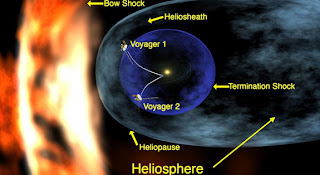
Scientists made the discovery by using a new computer model, which is based on data from NASA's twin Voyager probes. The unmanned Voyager 1 and Voyager 2, which launched in 1977, are plying the outer reaches of our solar system, a region known as the heliosheath.

The new discovery suggests that researchers will need to revise their views about the solar system's edge, NASA officials said. A more detailed picture of this region is key to our understanding of how fast-moving particles known as cosmic rays are spawned, and how they reach near-Earth space.

Read More

NASA proposes solar power project at Wallops Flight Facility in Va

nasa
NASA is proposing to install solar panels at its Wallops Flight Facility on Virginia's Eastern Shore.

The agency says it is proposing up to 80 acres of solar panels that would be capable of generating 10 gigawatt-hours per year of electricity.

The project would generate renewable electricity to help NASA meet or exceed requirements of the 2005 Federal Energy Policy Act and other executive orders. The project also would be expected to stabilize Wallops' growing utility costs and provide educational outreach regarding renewable energy technologies.

In addition, two 2.4 kilowatt residential-scale wind turbines would be installed around the facility.

NASA says the project in total would generate enough electricity in a year to power 850 average American homes.

Read More

NASA Spacecraft Tracks Raging Saturn Storm


A powerful electrical storm is currently blasting across the planet. According to NASA, this is primarily an electrical storm with lightning bolts 10,000 times more powerful than those on Earth. NASA's Cassini spacecraft is currently trolling our solar system and captured the image of the storm. The satellite is currently on a five-month mission to monitor Saturn and its moons.
This storm is about the size of the planet Earth! Saturn's electrical storms do look a lot like our Earth-bound thunderstorms, but they are much larger. Storms on Saturn are thousands of miles wide. Their lightning bolts produce radio signals thousands of times more powerful than those produced by our thunderstorms.
According to NASA: "Lightning flashes within the persistent storm produce radio waves called electrostatic discharges." The Cassini Satellite first detected these discharges on Nov. 27, 2007. The storm itself was spotted by Cassini's cameras on Decmber 6th.
How long do these storms last? "The electrostatic radio outbursts have waxed and waned in intensity for five months now," said NASA Official George Fischer, "We saw similar storms in 2004 and 2006 that each lasted for nearly a month, but this storm is longer-lived by far."
A NASA press release adds: "The new storm is located in Saturn's southern hemisphere--in a region nicknamed "Storm Alley" by mission scientists--where the previous lightning storms were observed by Cassini."

Hubble Data Used to Look 10,000 Years into the Future

he globular star cluster Omega Centauri has caught the attention of sky watchers ever since the ancient astronomer Ptolemy first catalogued it 2,000 years ago. Ptolemy, however, thought Omega Centauri was a single star. He didn't know that the "star" was actually a beehive swarm of nearly 10 million stars, all orbiting a common center of gravity.

The stars are so tightly crammed together that astronomers had to wait for the powerful vision of NASA's Hubble Space Telescope to peer deep into the core of the "beehive" and resolve individual stars. Hubble's vision is so sharp it can even measure the motion of many of these stars, and over a relatively short span of time.

A precise measurement of star motions in giant clusters can yield insights into how stellar groupings formed in the early universe, and whether an "intermediate mass" black hole, one roughly 10,000 times as massive as our Sun, might be lurking among the stars.

Analyzing archived images taken over a four-year period by Hubble's Advanced Camera for Surveys, astronomers have made the most accurate measurements yet of the motions of more than 100,000 cluster inhabitants, the largest survey to date to study the movement of stars in any cluster.

Soyuz Moved to Pad for Thursday Launch to Station


The Soyuz spacecraft that will carry three new Expedition 25 flight engineers to the International Space Station was rolled out to the launch pad at the Baikonur Cosmodrome in Kazakhstan on Tuesday. NASA astronaut Scott Kelly and Russian cosmonauts Alexander Kaleri and Oleg Skripochka will launch aboard the new Soyuz TMA-01M Thursday at 7:10 p.m. EDT (Friday, Kazakhstan time) and begin a five-month tour of duty aboard the station after docking to the Poisk module Saturday evening.

Meanwhile, the three Expedition 25 crew members already living and working aboard the station conducted a depressurization drill, collected data for science research and prepared for the installation of a device to produce water.

Commander Doug Wheelock began his workday early by participating in the Pro K experiment, which studies dietary countermeasures to lessen the bone loss experienced by astronauts during long-duration spaceflight. With assistance from Flight Engineer Shannon Walker, Wheelock collected a blood sample and stored it in the Minus Eighty-Degree Laboratory Freezer for ISS for study later by scientists back on Earth.

Antarctic Ozone Hole 2010

The Ozone Monitoring Instrument (OMI) on NASA’s Aura satellite acquired data for this map of ozone concentrations over Antarctica on September 12, 2010. OMI is a spectrometer that measures the amount of sunlight scattered by Earth’s atmosphere and surface, allowing scientists to assess how much ozone is present at various altitudes — particularly the stratosphere — and near the ground.

So far in 2010, the size and depth of the ozone hole has been slightly below the average for 1979 to 2009, likely because of warmer temperatures in the stratosphere over the far southern hemisphere. However, even slight changes in the meteorology of the region this month could affect the rate of depletion of ozone and how large an area the ozone hole might span. You can follow the progress of the ozone hole by visiting NASA’s Ozone Hole Watch page.

September 16 is the International Day for the Preservation of the Ozone Layer, a commemoration of the day in 1987 when nations commenced the signing of the Montreal Protocol to limit and eventually ban ozone-depleting substances such as chlorofluorocarbons (CFCs) and other chlorine and bromine-containing compounds. The ozone scientific assessment panel for the United Nations Environment Program, which monitors the effectiveness of the Montreal Protocol, is expected to release its latest review of the state of the world’s ozone layer by the end of 2010. (The last assessment was released in 2006.) Newman is one of the four co-chairs of the assessment panel.

A Snapshot of Sea Ice


How does the Aqua satellite "see" sea ice? Microwaves. Everything on Earth’s surface -- including people -- emits microwave radiation, the properties of which vary with the emitter, thereby allowing the AMSR-E microwave sensor on Aqua to map the planet.

Ice emits more microwave radiation than water, making regions of the ocean with floating ice appear much brighter than the open ocean to the AMSR-E sensor. This difference allows the satellite to capture a sea ice record year-round, through cloud cover and the months of polar night. Continuous records are important because sea ice is dynamic. Besides melting and freezing, the ice moves with wind and currents which can cause it to split or pile up.

"The data from AMSR-E and other NASA satellites are critical for understanding the coupling between sea ice and the ocean and atmosphere," said Tom Wagner, Cryosphere program manager at NASA Headquarters in Washington. "It’s important for us to understand these connections to improve our predictive models of how the planet will change."

Magnetospheric Mission Passes Major Milestone


On the sun, magnetic reconnection causes solar flares more powerful than several atomic bombs combined. In Earth's atmosphere, magnetic reconnection dispenses magnetic storms and auroras, and in laboratories on Earth it can cause big problems in fusion reactors.

Although the study of magnetic reconnection dates back to the 1950s and despite numerous scientific papers addressing this perplexing issue, scientists still cannot agree on one accepted model.

In 2014, NASA is scheduled to launch a satellite that will greatly increase our understanding of this phenomenon when it launches the Magnetospheric Multiscale (MMS) mission, a suite of four identical spacecraft that will study magnetic reconnection in the best possible laboratory – the Earth’s magnetosphere. The spacecraft will obtain measurements necessary to test prevailing theories as to how reconnection is enabled and how it progresses.

Kepler Mission Discovers Two Planets Transiting the Same Star


Kepler spacecraft has discovered the first confirmed planetary system with more than one planet crossing in front of, or transiting, the same star.

The transit signatures of two distinct planets were seen in the data for the sun-like star designated Kepler-9. The planets were named Kepler-9b and 9c. The discovery incorporates seven months of observations of more than 156,000 stars as part of an ongoing search for Earth-sized planets outside our solar system. The findings will be published in Thursday's issue of the journal Science.

Kepler's ultra-precise camera measures tiny decreases in the stars' brightness that occur when a planet transits them. The size of the planet can be derived from these temporary dips.

The distance of the planet from the star can be calculated by measuring the time between successive dips as the planet orbits the star. Small variations in the regularity of these dips can be used to determine

Normal sea surface temperatures

Deviations from normal sea surface temperatures (left) and sea surface heights (right) at the peak of the 2009-2010 central Pacific El Niño, as measured by NOAA polar orbiting satellites and NASA’s Jason-1 spacecraft,

PASADENA, Calif. – A relatively new type of El Niño, which has its warmest waters in the central-equatorial Pacific Ocean, rather than in the eastern-equatorial Pacific, is becoming more common and progressively stronger, according to a new study by NASA and NOAA. The research may improve our understanding of the relationship between El Niños and climate change, and has potentially significant implications for long-term weather forecasting.

Lead author Tong Lee of NASA's Jet Propulsion Laboratory, Pasadena, Calif., and Michael McPhaden of NOAA's Pacific Marine Environmental Laboratory, Seattle, measured changes in El Niño intensity since 1982. They analyzed NOAA satellite observations of sea surface temperature, checked against and blended with directly-measured ocean temperature data. The strength of each El Niño was gauged by how much its sea surface temperatures deviated from the average. They found the intensity of El Niños in the central Pacific has nearly doubled, with the most intense event occurring in 2009-10.

The scientists say the stronger El Niños help explain a steady rise in central Pacific sea surface temperatures observed over the past few decades in previous studies--a trend attributed by some to the effects of global warming. While Lee and McPhaden observed a rise in sea surface temperatures during El Niño years, no significant temperature increases were seen in years when ocean conditions were neutral, or when El Niño's cool water counterpart, La Niña, was present.

Launch Preps Move Ahead for Mission to International Space Station

STS-133 mission at NASA's Johnson Space Center in Houston
During space shuttle Discovery's final spaceflight, the STS-133 crew members will take important spare parts to the International Space Station along with the Express Logistics Carrier-4. Discovery is being readied for flight inside Kennedy's Orbiter Processing Facility-3 while its solid rocket boosters are stacked inside the nearby Vehicle Assembly Building. STS-133 is slated to launch Nov. 1.

four-quadrant solar sail propulsion system


Engineers at NASA have designed and built NanoSail-D, a "solar sail" that will test NASA's ability to deploy a massive but fragile spacecraft from an extremely compact structure. Much like the wind pushing a sailboat through water, solar sails rely on sunlight to propel vehicles through space. The sail captures constantly streaming solar particles, called photons, with giant sails built from a lightweight material. Over time, the buildup of these particles provides enough thrust for a small spacecraft to travel in space.

One of NanoSail-D's several mission objectives is to demonstrate the capability to deploy a large sail structure from a highly compacted volume without recontacting the spacecraft. The mission also will demonstrate and test the de-orbiting capabilities of solar sails.

On Thursday, Aug. 19, principal investigator NanoSail-D, Dean Alhorn, at NASA's Marshall Space Flight Center in Huntsville, Ala. answered your questions about the NanoSail-D mission and solar sails in general.

Astrophysics Decadal Survey

NASA is pleased to receive the National Research Council's Astro2010 report, New Worlds, New Horizons in Astronomy and Astrophysics. We appreciate the science community's efforts in defining a set of compelling science objectives for space-based astrophysical research for the coming decade, and for carefully considering the cost of the initiatives the report recommends.

We look forward to assessing the report's findings and recommendations for strengthening the nation's world-class space astrophysics program. From new worlds to new physics, the coming decade of discovery leverages not only our current space observatories – such as the Hubble, Spitzer, Chandra and Fermi space telescopes – but also our planned facilities – especially those from previous decadal surveys, the James Webb Space Telescope and the Stratospheric Observatory for Infrared Astronomy (SOFIA). The survey calls for new facilities that expand our reach into the cosmos that will include opportunities for coordination and cooperation with other Federal agencies and international partners.

Hubble Space Telescope

The hot, blue star HE 0437-5439 has been tossed out of the center of our Milky Way galaxy with enough speed to escape the galaxy's gravitational clutches. The stellar outcast is rocketing through the Milky Way's distant outskirts at 1.6 million miles an hour, high above the galaxy's disk, about 200,000 light-years from the center. The star is destined to roam intergalactic space.

A hundred million years ago, a triple-star system was traveling through the bustling center of our Milky Way galaxy when it made a life-changing misstep. The trio wandered too close to the galaxy's giant black hole, which captured one of the stars and hurled the other two out of the Milky Way. Adding to the stellar game of musical chairs, the two outbound stars merged to form a super- hot, blue star.

This story may seem like science fiction, but astronomers using NASA's Hubble Space Telescope say it is the most likely scenario for a so-called hypervelocity star, known as HE 0437-5439, one of the fastest ever detected. It is blazing across space at a speed of 1.6 million miles hour, three times faster than our Sun's orbital velocity in the Milky Way. Hubble observations confirm that the stellar speedster hails from the Milky Way's core, settling some confusion over where it originally called home.

NASA's WISE Mission to Complete Extensive Sky Survey

NASA's Wide-field Infrared Survey Explorer will complete its first survey of the entire sky on July 17, 2010. The mission has generated more than one million images so far, of everything from asteroids to distant galaxies.

"Like a globe-trotting shutterbug, WISE has completed a world tour with 1.3 million slides covering the whole sky," said Edward Wright, the principal investigator of the mission at the University of California, Los Angeles.

Some of these images have been processed and stitched together into a new picture being released today. It shows the Pleiades cluster of stars, also known as the Seven Sisters, resting in a tangled bed of wispy dust. The pictured region covers seven square degrees, or an area equivalent to 35 full moons, highlighting the telescope's ability to take wide shots of vast regions of space.

The new picture was taken in February. It shows infrared light from WISE's four detectors in a range of wavelengths. This infrared view highlights the region's expansive dust cloud, through which the Seven Sisters and other stars in the cluster are passing. Infrared light also reveals the smaller and cooler stars of the family.

"The WISE all-sky survey is helping us sift through the immense and diverse population of celestial objects," said Hashima Hasan, WISE Program scientist at NASA Headquarters in Washington. "It's a great example of the high impact science that's possible from NASA's Explorer Program."

The first release of WISE data, covering about 80 percent of the sky, will be delivered to the astronomical community in May of next year. The mission scanned strips of the sky as it orbited around the Earth's poles since its launch last December. WISE always stays over the Earth's day-night line. As the Earth moves around the sun, new slices of sky come into the telescope's field of view. It has taken six months, or the amount of time for Earth to travel halfway around the sun, for the mission to complete one full scan of the entire sky.

For the next three months, the mission will map half of the sky again. This will enhance the telescope's data, revealing more hidden asteroids, stars and galaxies. The mapping will give astronomers a look at what's changed in the sky. The mission will end when the instrument's block of solid hydrogen coolant, needed to chill its infrared detectors, runs out.

"The eyes of WISE have not blinked since launch," said William Irace, the mission's project manager at NASA's Jet Propulsion Laboratory in Pasadena, Calif. "Both our telescope and spacecraft have performed flawlessly and have imaged every corner of our universe, just as we planned."


Meet the Titans: Dust Disk Found Around Massive Star

A new discovery has the potential to answer the long standing question of how massive stars are born and hints at the possibility that planets could form around the galaxy's biggest bodies.

"Astronomers have long been unclear about how the most massive stars form," said Stefan Kraus, a NASA Sagan Exoplanet Fellow and astronomer at the University of Michigan, Ann Arbor. "Because they tend to be at very large distances and surrounded by dusty envelopes, it's very hard to separate and closely observe them."

To get a better look, Kraus' team used the Very Large Telescope Interferometer of the European Southern Observatory in Chile to focus on IRAS 13481-6124, a star located at a distance of 10,000 light-years away in the constellation Centaurus, and about 20 times more massive than our sun. "We were able to get a very sharp view into the innermost regions around this star by combining the light of separate telescopes," Kraus said, "basically mimicking the resolving power of a telescope with an incredible 85-meter [280-foot] mirror."

The team's observations yielded a jackpot result: the discovery of a massive disk of dust and gas encircling the giant young star. "It's the first time something like this has been observed," Kraus said. "The disk very much resembles what we see around young stars that are much smaller, except everything is scaled up and more massive."

The presence of the disk is strong evidence that even the very largest stars in the galaxy form by the same process as smaller ones growing out of the dense accumulation of vast quantities of gas and dust, rather than the merging of smaller stars, as had been previously suggested by some scientists. The results were confirmed by NASA's Spitzer Space Telescope. "We looked at archival images of the star taken by Spitzer, and confirmed that the star is flinging disk material outward from its polar regions, just as we see with smaller stars and their dust disks," Kraus said.

Still, huge stars like IRAS 13481-6124 provide the building blocks for life to arise elsewhere in the universe. "High-mass stars are where heavy elements necessary for life are created, so they are of major importance," Kraus said "This discovery is a clearer picture than we've had before and allows us to understand them better."


Total Solar Eclipse


On Sunday, 2010 July 11, a total eclipse of the Sun is visible from within a narrow corridor that traverses Earth's southern Hemisphere. The path of the Moon's umbral shadow crosses the South Pacific Ocean where it makes no landfall except for Mangaia and Easter Island . The path of totality ends just after reaching southern Chile and Argentina. The Moon's penumbral shadow produces a partial eclipse visible from a much larger region covering the South Pacific and southern South America.

Though no live coverage of the eclipse is planned, the National Geographic Channel will broadcast a special edition of Naked Science, "Easter Island Eclipse" with video from the eclipse shot earlier in the day, at 11:00pm EST on Sunday evening. The show will be rebroadcast on July 15th at 10pm.

Emergency Training, Orientation and Science for Crew

Expedition 24 Commander Alexander Skvortsov and Flight Engineers Mikhail Kornienko and Tracy Caldwell Dyson participated in an emergency Soyuz descent drill Thursday to prepare for the unlikely event that they would need to evacuate the station during Monday’s relocation of the Soyuz TMA-19 spacecraft from the aft end of Zvezda to the Rassvet module.

The Soyuz TMA-19 arrived at the station June 17 carrying Flight Engineers Doug Wheelock, Shannon Walker and Fyodor Yurchikhin, and its move will clear the way for the arrival of the ISS Progress 38 cargo craft on July 2.

To help familiarize themselves with their new home aboard the orbital outpost, Wheelock, Walker and Yurchikhin continued their orientation activities.

Throughout the day Wheelock had time set aside to participate in a few biomedical experiments, including the Scaling Body-Related Actions in the Absence of Gravity (Passages) experiment. Passages tests how astronauts interpret visual information in the microgravity environment aboard the station using a variety of visual exercises.

He also worked with the Bodies in the Space Environment (BISE) Experiment, which evaluates how perception and orientation are affected by long-duration spaceflight. The session was photographed by Caldwell Dyson.